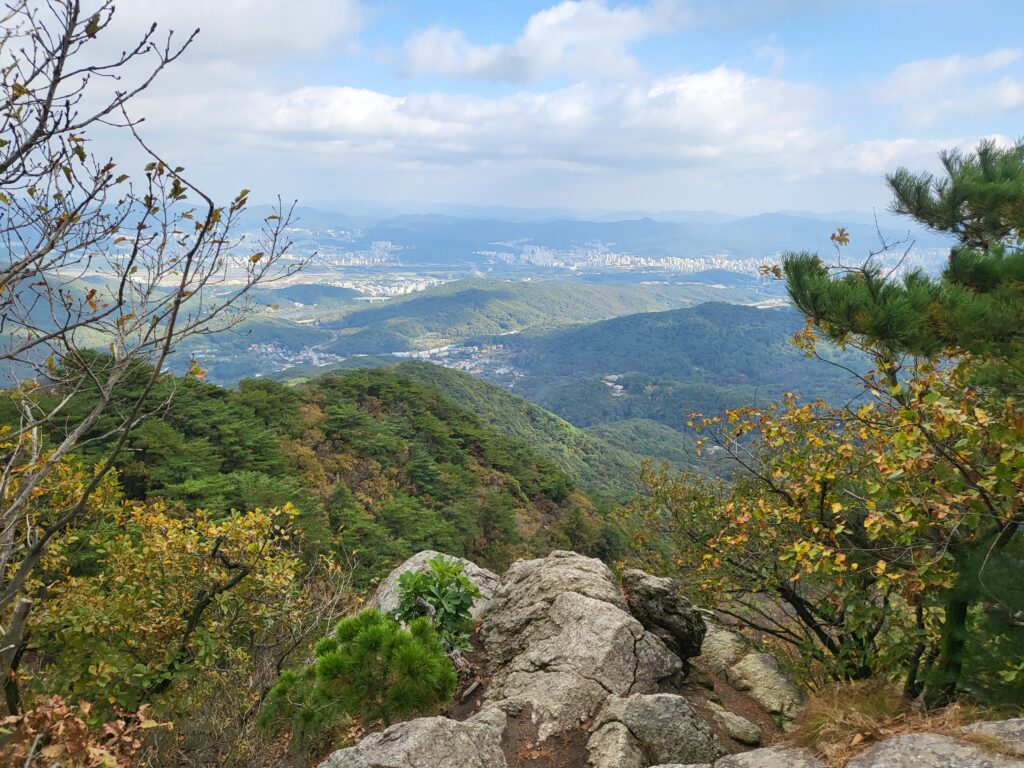
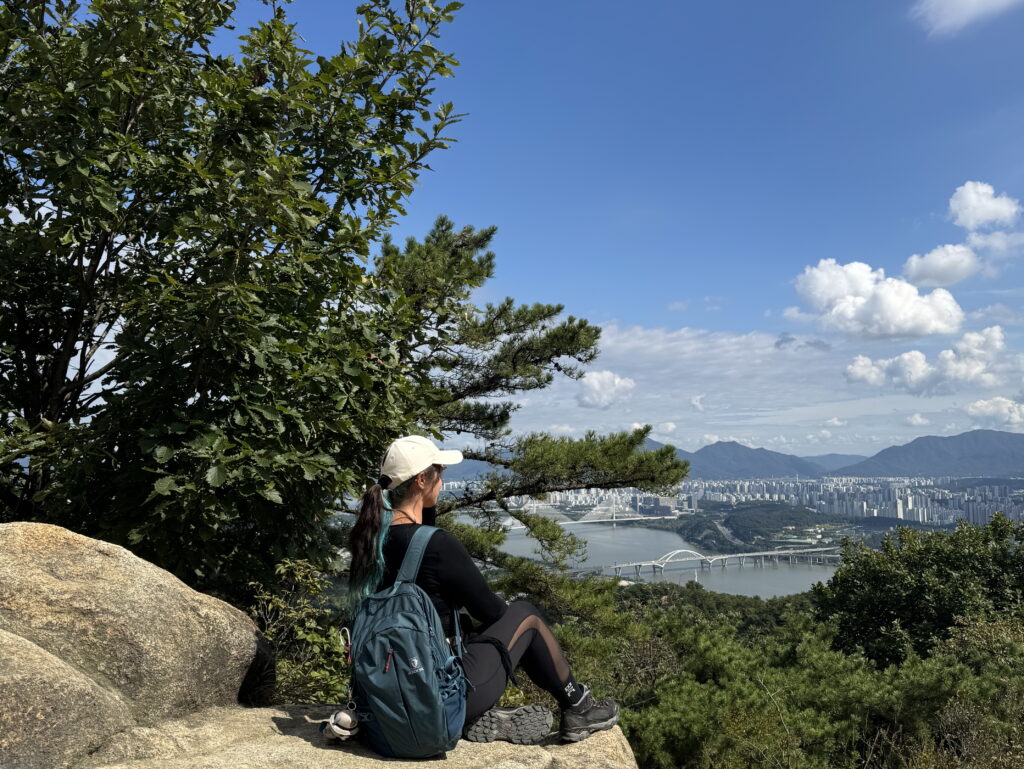
South Koreas territory is 70% mountainous, so it is no wonder that the capital is full of hills and mountains and even a National Park to hike. This variety of mountains to explore, offering trails for beginners to experts. You can spend years walking the various trails all over the city. So it may be overwhelming on where to start and which hikes may be perfect to try at the beginning. This overview highlights hiking routes in Seoul for all levels—from casual beginners to seasoned adventurers. Let’s start.
1. Inwangsan (339.8 m)
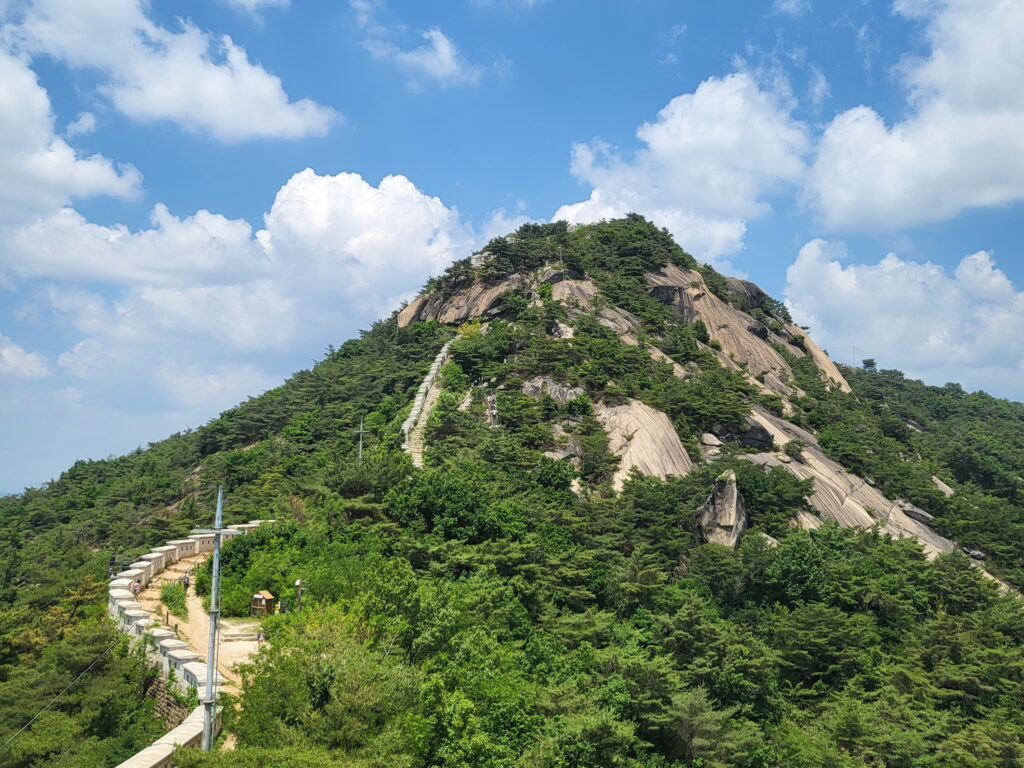
Located just behind Gyeongbokgung Palace, Inwangsan is one of Seoul’s most iconic peaks. The mountain is easy to reach from the city center and offers a relatively gentle climb, making it a favorite for both locals and visitors. From the summit, hikers are rewarded with beautiful views over central Seoul, Gyeongbokgung Palace, and the surrounding mountains—scenery that’s breathtaking both in the daylight and when the city lights up at night.
Height: 339.8 m
Duration: 2–2.5 hrs (round trip)
Difficulty: Beginner–Moderate
Highlights
Walk along sections of the historic Seoul City Wall, gaze down over Gyeongbokgung Palace, and finish your outing with a leisurely stroll through Insadong or Bukchon Hanok Village. If you still have energy, you can continue hiking—Inwangsan connects westward to Ansan and eastward to Bugaksan.
Access
There are several trailheads, but the two most popular are:
From Changuimun Gate (bus 1020, 7022, or 7212 from Gyeongbokgung Station Exit 3).
From Independence Gate Station (Line 3), right next to Seodaemun Prison.
⚠ Note: Certain sections are military zones—be sure to stay on the marked trails.
2. Bukhansan (836.5 m)
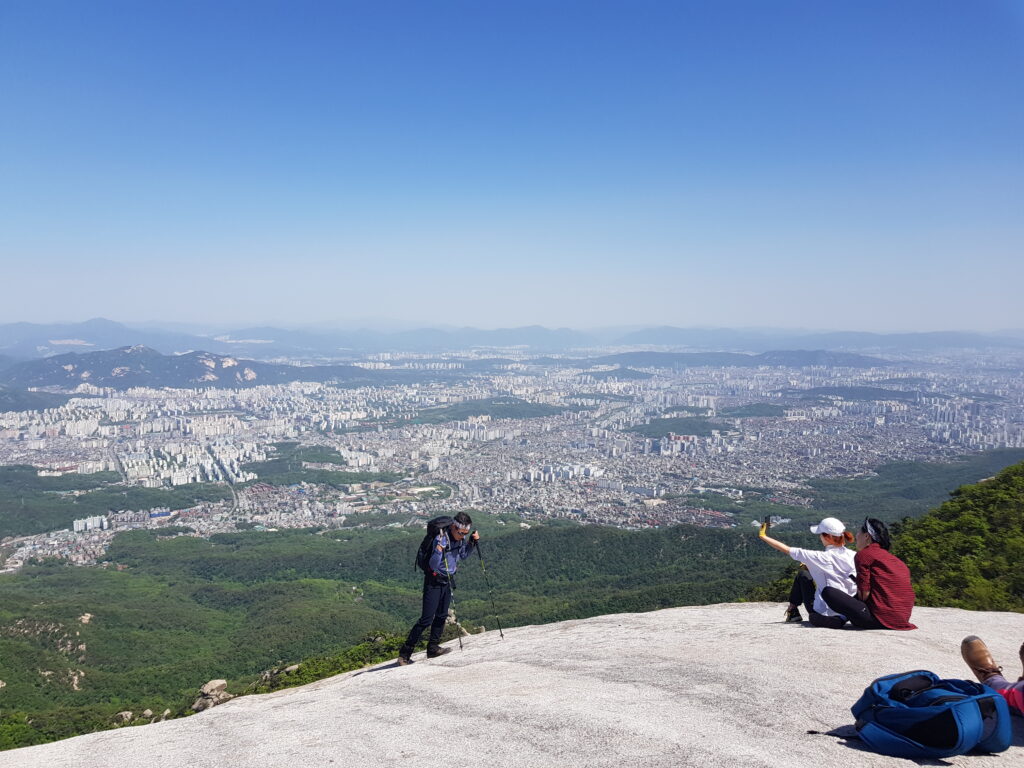
Bukhansan National Park is Seoul’s most beloved hiking destination, popular with both locals and visitors. Its dramatic granite peaks, historic temples, and fortress walls create a perfect balance of nature and culture. The park’s highest point, Baegundae, is the tallest peak in Seoul, but countless trails lead to lesser-known summits, offering plenty of opportunities to explore beyond the main route.
Height: 836.5 m (Baegundae Peak)
Duration: 4–6 hrs round trip (depending on route)
Difficulty: Moderate–Advanced
Highlights
Panoramic views from Baegundae Peak stretching across Seoul and as far as Incheon and the sea, the historic Bukhansanseong Fortress, and serene temples such as Doseonsa.
Access
Popular start: Bukhansan Fortress Entrance (Bus 34, 704, or 8772 from Gupabal Station Exit 1).
Many trailheads exist — best to check route before going.
⚠ Note: Weekend hikes can be quite busy, so starting early is advised. If your schedule allows, weekdays are the best time to enjoy the trails.
3. Gwanaksan (632.2 m)
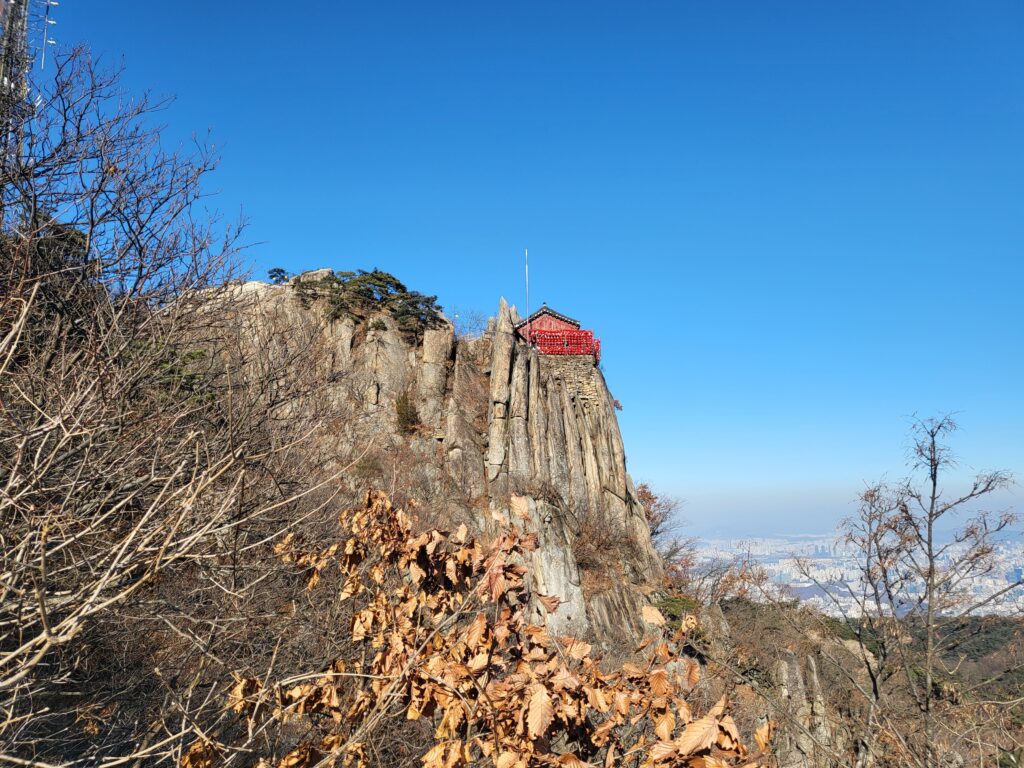
Gwanaksan – literally “Crown Mountain” – is one of Seoul’s most distinctive peaks, named for its rocky crest that resembles a traditional crown. The mountain is beloved by locals and students from nearby Seoul National University, as it combines rugged granite ridges with forested trails and hidden hermitages. Though smaller than Bukhansan, its steep paths and dramatic views over southern Seoul make it a rewarding hike for those seeking both challenge and scenery.
Height: 632.2 m
Duration: 3–5 hrs round trip (depending on route)
Difficulty: Moderate
Highlights
Sweeping views over southern Seoul from the summit, hermitages like Yeonjuam constructed dramatically on cliffs, and quiet forested trails that feel far removed from the city.
Access
Gwanaksan Station (Line 4 / Shinbundang Line) provides direct access to the trails on the eastern side of the mountain. Inside the station, you’ll also find the Seoul Hiking Tourism Center, where you can rent hiking gear and pick up a trail map.
Other trailheads include Sadang Station and Gwacheon.
⚠ Note: Trails can be steep and rocky, so sturdy shoes are recommended. Some sections may get slippery after rain.
4. Achasan & Yongmasan (287 m / 348 m)
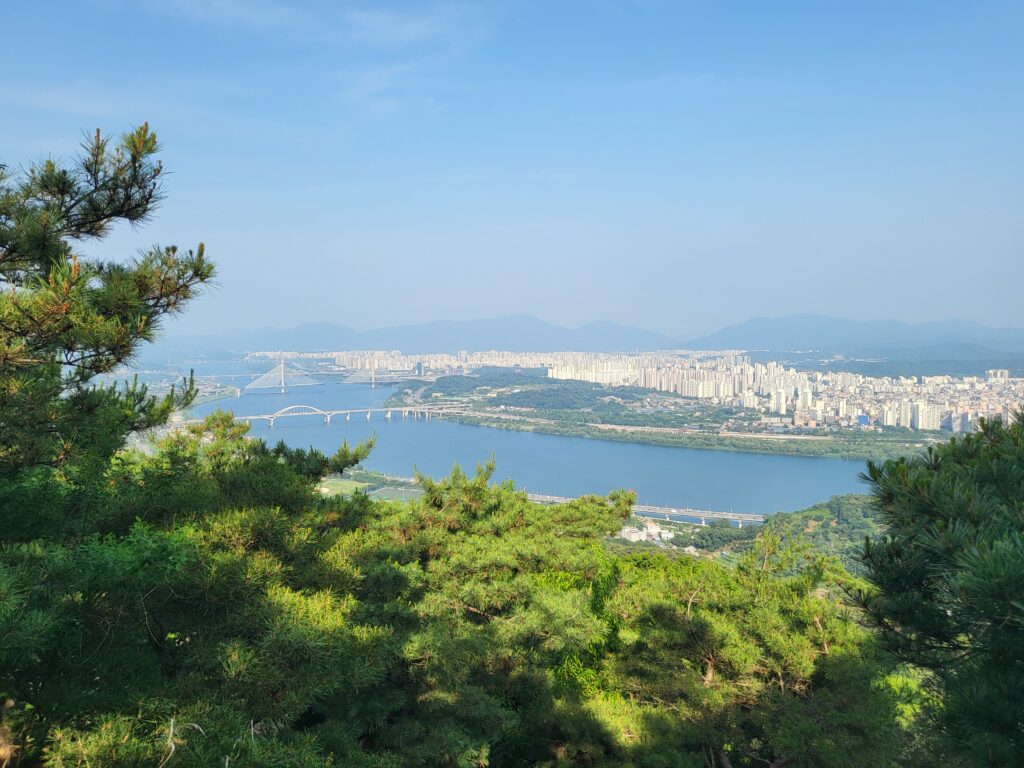
Achasan and Yongmasan are two connected peaks that make for one of Seoul’s easiest yet most scenic ridge hikes. Rising gently above the Han River, Achasan rewards hikers with sweeping views over the water and the city, while Yongmasan adds a touch more elevation and even broader panoramas of eastern Seoul. The trail is short, well-marked, and perfect for beginners or anyone looking for a quick outdoor escape without leaving the city.
Height: 287 m (Achasan), 348 m (Yongmasan)
Duration: 2–3 hrs round trip (both peaks)
Difficulty: Beginner
Highlights
Wide views of the Han River, Olympic Bridge, and Lotte Tower. The ridge trail links both peaks, giving you the chance to bag two summits in a single hike.
Access
Start from Achasan Station (Line 5, Exit 2) for Achasan.
Or begin at Yongmasan Station (Line 7) if you’d like to hike in the opposite direction.
⚠ Note: This trail is especially popular with families, school groups, and casual hikers, so expect company on weekends.
5. Cheonggyesan (620 m)
Cheonggyesan is a much-loved escape for residents of southern Seoul, offering cool, shaded forest trails and sweeping city views without the heavy crowds of Bukhansan. It’s often considered the perfect “next step” for beginners ready to take on a moderate challenge. With multiple routes to the summit, it’s a versatile hike that balances tranquility with rewarding views.
Height: 620 m
Duration: 3–4 hrs round trip
Difficulty: Moderate
Highlights
Peaceful forest paths, panoramic views over Gangnam, and several trail options suited to different fitness levels.
Access
Start from Cheonggyesan Station (Shinbundang Line) — the trailhead is only a short walk from the exit.
⚠ Note: Some sections are steep and can be tough on the knees; trekking poles are recommended.
Conclusion
Whether you’re seeking a quick escape into nature, a cultural journey through temples and fortress walls, or a challenging climb with sweeping city views, Seoul’s mountains have something for everyone. Each trail offers its own character, some steep and rugged, others gentle and family-friendly, but all provide a chance to step away from the bustle of the city and connect with Korea’s natural and historical heritage. Lace up your shoes, pick a peak that matches your pace, and discover why hiking is such an essential part of life in Seoul.
Do you have a favorite peak in Seoul, or one you’re dreaming of climbing? Share it below and let’s hike it together!